
How to Translate Your Website to Boost Organic Traffic
Did you know that over 75% of internet users do not speak English as their first language? Limiting your website to a single language means missing out on a massive global audience and valuable organic traffic (Linkedin).
In today’s digital marketplace, businesses that invest in website localization and strategic localization can reach new markets, improve user engagement, and rank higher in local search engines.
In this guide, we’ll show you how to translate your website effectively, explore the difference between translation and localization, and share actionable strategies to turn your multilingual site into a powerful driver of organic traffic.
Understanding Website Translation and Localization
Before starting the translation process, it’s essential to recognize the distinction between translation and localization. While they are closely related, each serves a unique purpose.
- Translation involves changing written content from one language into another while preserving its original meaning.
- Localization goes beyond translation by adapting your website to the cultural, regional, and linguistic nuances of your target audience. This can include changing images, colors, date formats, currencies, and even content tone.
For example, a blog post written in English may be accurately translated into Spanish, but localization would ensure the references, examples, and visuals resonate with Latin American or Spanish audiences specifically. When done properly, localization enhances user experience and increases the likelihood of engagement, shares, and conversions.
Why Translating Your Website Boosts Organic Traffic
1. Improves SEO for Multiple Languages
Search engines favor websites that provide relevant content in the user’s native language. By translating your website, you can create multilingual content that ranks in local search engines, such as Google.es in Spain or Google.fr in France. Multilingual SEO involves optimizing translated pages with localized keywords, meta descriptions, headers, and alt text to ensure your content appears in search results globally.
2. Expands Your Audience Reach
A website in only one language limits your audience to speakers of that language. By offering content in multiple languages, you can attract users from new countries and regions, increasing traffic, brand awareness, and potential sales. For businesses looking to operate internationally, website translation is not optional but necessary.
3. Builds Trust and Engagement
Users are more likely to trust and engage with websites presented in their native language. A well-localized website creates a seamless experience, encouraging visitors to explore, subscribe, or purchase. Higher engagement also signals search engines that your content is valuable, which can further boost organic rankings.
4. Reduces Bounce Rates
When visitors land on a website they cannot fully understand, they are more likely to leave within seconds. Providing content in a user’s native language improves readability and usability, encouraging them to stay longer and explore more pages. Lower bounce rates send positive signals to search engines, which can improve your rankings and overall organic visibility.
5. Strengthens Local Search Presence
Translating your website allows you to target region-specific keywords and appear in local search results. This is especially valuable for businesses entering new markets, as localized content helps you rank for queries that reflect local language, culture, and search behavior. A strong local search presence increases qualified traffic and improves your chances of attracting users who are ready to convert.
Steps to Translate Your Website Effectively
1. Conduct a Website Audit
Start by analyzing your current website content. Identify the pages, blog posts, product descriptions, and landing pages that are most visited or crucial for conversions. This ensures that you focus translation efforts on high-impact content first.
Consider these questions during your audit:
- Which pages drive the most traffic?
- Which pages generate the most leads or sales?
- Which content is evergreen and will benefit long-term from translation?
2. Choose the Right Languages
Selecting the right languages is critical for maximizing the impact of your translation efforts. Conduct market research to determine where your target audience is located, the languages they speak, and their online behavior.
Tools like Google Analytics, Google Search Console, and SEMrush can provide insights into which countries visit your website the most and what search terms they use. Start with the languages that have the highest potential for traffic and conversions, then expand gradually.
3. Plan Your Multilingual SEO Strategy
Simply translating content is not enough. To drive organic traffic, you need a multilingual SEO strategy. Consider the following:
- Localized Keywords: Conduct keyword research for every target language to identify the terms users actually search for in each region. Popular search terms vary by region, so translating English keywords directly may not yield results.
- Meta Tags and Descriptions: Optimize meta titles, descriptions, and headers with localized keywords.
- Hreflang Tags: Implement hreflang tags to inform search engines about the language and region of each page, preventing duplicate content issues.
- URL Structure: Use language-specific URLs or subdirectories (e.g., example.com/fr/ for French) to make it easy for search engines to index your multilingual pages.
4. Choose a Translation Method
There are several approaches to translating your website. Each has advantages and disadvantages:
- Human Translation: Professional translators deliver accurate and culturally sensitive translations. This is ideal for high-stakes content such as product pages, legal documents, or blog posts that represent your brand.
- Machine Translation: Tools like Google Translate or DeepL can quickly convert large volumes of content. While faster and cost-effective, machine translation may lack cultural nuance and accuracy.
- Hybrid Approach: Combine machine translation with human editing. This approach speeds up the process while ensuring quality and localization accuracy.
5. Implement Localization
After translation, focus on localizing your website. Localization ensures that the user experience is culturally relevant.
Key localization elements include:
- Visual Content: Adapt images, graphics, and icons to reflect local culture.
- Date and Time Formats: Use local formats (e.g., DD/MM/YYYY in Europe).
- Currency and Payment Methods: Display prices in the local currency and offer region-specific payment options.
- Tone and Messaging: Adjust language style to suit local preferences, whether formal, friendly, or humorous.
6. Optimize Technical SEO
A multilingual website requires technical SEO to ensure search engines crawl and index your translated pages properly:
- Sitemaps: Create a sitemap that includes all language versions of your pages.
- Canonical Tags: Use canonical tags to indicate the primary version of each page and avoid duplicate content issues.
- Page Speed: Ensure your multilingual website loads quickly, as page speed impacts both SEO and user experience.
- Mobile Optimization: Many users access websites via mobile devices, so responsive design is essential for all language versions.
7. Test and Monitor Performance
Once your website is translated and localized, monitor its performance regularly. Leverage tools such as Google Analytics and Google Search Console to monitor and measure:
- Organic traffic from different regions and languages
- Keyword rankings in local search engines
- Bounce rates and session duration
- Conversion rates for localized content
Regular testing allows you to refine your strategy, identify content that needs further optimization, and improve overall performance.
Common Mistakes to Avoid
Even with the best intentions, website translation can backfire if not done correctly. Avoid these mistakes:
- Direct Translation Without Localization: Literal translation may confuse users or fail to resonate culturally.
- Ignoring SEO in Translated Content: Failing to optimize translated pages for search engines can limit organic traffic.
- Using Low-Quality Machine Translation Only: Poor translations can damage brand credibility and trust.
- Neglecting Technical SEO: Missing hreflang tags, canonical issues, or slow page speeds can hurt rankings.
- Overlooking Cultural Sensitivities: Colors, symbols, or phrases that work in one culture may be inappropriate or offensive in another.
- Ignoring Mobile Optimization: Translated content that is not mobile-friendly can harm user experience and rankings.
Read more about this here.
Benefits of a Multilingual Website Beyond Traffic
While boosting organic traffic is a major benefit, translating your website also brings additional advantages:
- Enhanced User Experience: Visitors feel valued when they can access information in their native language.
- Increased Conversions: Localized product descriptions and content lead to higher engagement and sales.
- Stronger Brand Presence: A multilingual website demonstrates professionalism and global reach.
- Competitive Advantage: Many businesses still operate primarily in one language. A translated and localized website sets you apart.
- Greater Customer Trust: Communicating in a user’s native language builds credibility and long-term loyalty.
- Higher Content Shareability: Users are more likely to share content that is relevant to their language and culture.
Tools and Resources for Website Translation
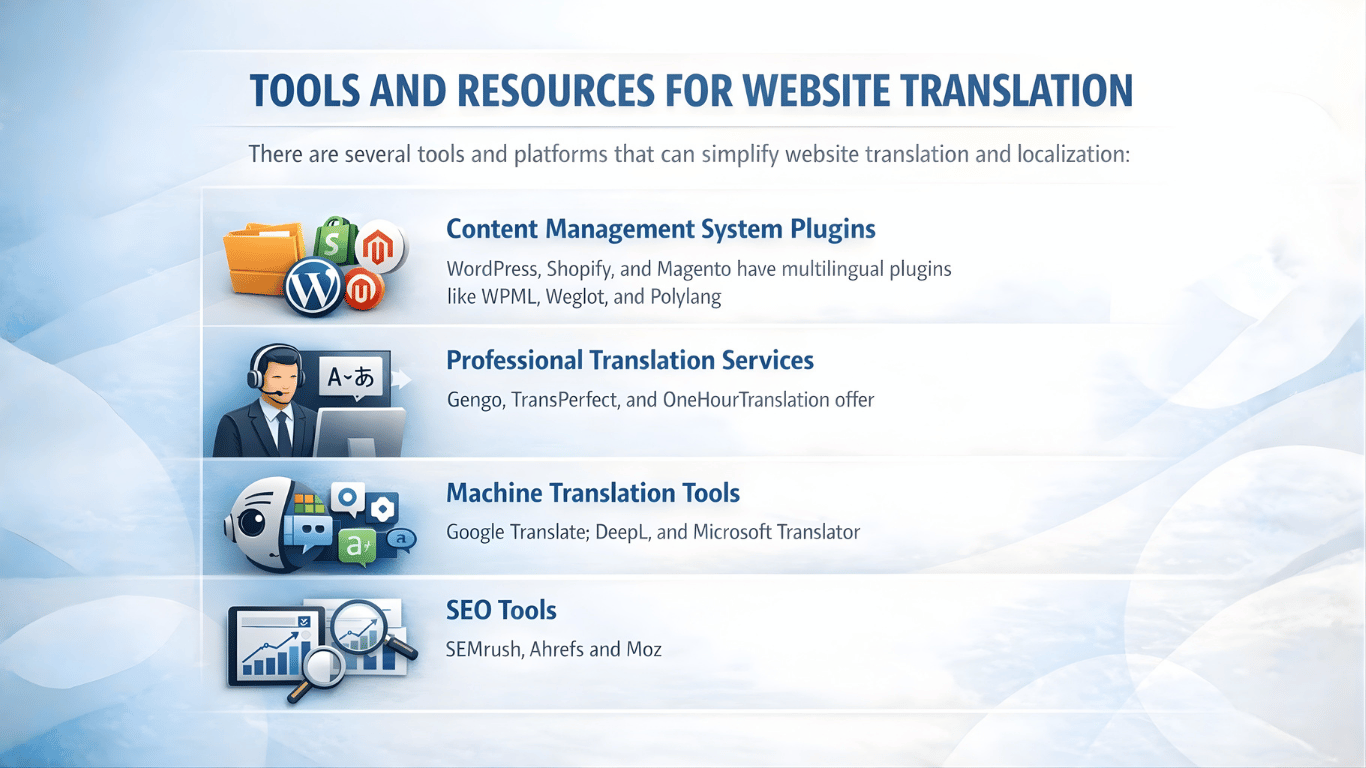
There are several tools and platforms that can simplify website translation and localization:
- Content Management System Plugins: WordPress, Shopify, and Magento have multilingual plugins like WPML, Weglot, and Polylang.
- Professional Translation Services: Platforms like Gengo, TransPerfect, and OneHourTranslation offer expert human translations.
- Machine Translation Tools: Google Translate, DeepL, and Microsoft Translator can assist in initial translations.
- SEO Tools: SEMrush, Ahrefs, and Moz can help identify localized keywords and track performance.
Conclusion
Translating your website is no longer just a nice-to-have; it’s a strategic necessity for businesses aiming to grow globally. By combining professional translation with cultural localization, optimizing for multilingual SEO, and continuously monitoring performance, you can attract more organic traffic, engage international audiences, and increase conversions.
Remember, the key to success is not just translating words but delivering a seamless, culturally relevant user experience.
FAQ
How does translating a website improve organic traffic?
Translating your website boosts organic traffic by:
- Ranking in search results for multiple languages and regions
- Targeting localized keywords used by international audiences
- Reducing bounce rates by providing content in native languages
- Increasing user engagement and time spent on site
- Expanding visibility in global and local search engines
How does website translation differ from localization?
Website translation focuses on converting text from one language to another, while localization adapts the entire user experience to a specific culture or region. Localization may include adjusting images, currencies, date formats, and tone to ensure the content feels natural and relevant to local audiences.
Which languages should I translate my website into first?
Start by analyzing your website analytics to identify where your traffic comes from and which markets show growth potential. Prioritize languages spoken by your target customers and regions with strong demand for your products or services to maximize ROI.
Can machine translation alone improve SEO performance?
Machine translation can help scale content quickly, but using it alone may lead to inaccuracies and poor user experience. A hybrid approach that combines machine translation with human editing ensures quality, cultural relevance, and better SEO results.
How do I maintain SEO when launching a multilingual website?
To maintain strong SEO performance, make sure to:
- Implement hreflang tags to signal language and region targeting
- Use localized keywords instead of direct translations
- Enhance meta titles, descriptions, and image alt text for every target language
- Create language-specific URLs or subdirectories
- Monitor traffic and rankings using analytics tools