
Social Media Localization: Reach Global Audiences Effectively
Think about the last time you saw a brand post on social media in a language that was not your native language. Did you stop and read it, or did you simply scroll past it? Most people scroll past.
Picture this: a new movie from a popular global streaming platform is released, and everyone in your country is talking about it online. While scrolling through social media, you notice a platform has posted about the movie in your language, using a local meme that perfectly captures the excitement people are feeling. It feels like it understands your culture and is part of the same conversation. And the next time you are choosing what to watch, that platform is likely the first one that comes to mind.
This is where social media localization does its magic.
In this blog, we will explore what social media localization is, why it matters, and how businesses can implement it effectively to reach global audiences.
What is social media localization?
Social media localization is the process of adapting social media content for different regions, languages, and cultures. It involves translating text, adjusting visuals, modifying messaging style, and aligning posts with local trends or cultural references.
Localization goes beyond simple translation. A direct translation may convert words into another language, but localization ensures the content feels natural and relevant to the target audience.
For example, a brand using a popular Western holiday like Thanksgiving in a social media campaign might connect well with audiences in the United States, but the same message may not make sense in countries where the holiday is not celebrated. Through localization, the brand can adapt the campaign to highlight a locally relevant event or festival, making the content more meaningful for that audience.
The goal is simple: make global audiences feel like the content was created specifically for them.
Why Social Media Localization Matters
Many businesses still believe that posting in English is enough to reach international audiences. However, consumer behavior shows otherwise. Studies reveal that most consumers prefer interacting with content in their native language, and localized marketing can significantly improve engagement and conversions.
Here are some key reasons why localization matters in social media marketing.
1. People Prefer Content in Their Native Language
Language plays a crucial role in communication and trust. Research indicates that a majority of consumers are more likely to purchase when information is available in their native language.
When social media posts are localized, users feel more comfortable interacting with the brand. This increases the likelihood of likes, comments, shares, and conversions.
2. Localization Improves Engagement
Localized social media campaigns often perform better than generic global campaigns. When brands adapt their tone, references, and visuals to local audiences, users are more likely to engage with the content.
People respond better when the content reflects their language, culture, and interests.
3. It Builds Trust and Brand Connection
Localization shows that a brand respects and understands its audience. When businesses communicate in a culturally relevant way, they create stronger emotional connections with customers.
Consumers are more likely to trust brands that make an effort to understand their culture and preferences.
4. It Helps Brands Enter New Markets
Localization is a powerful strategy for expanding into international markets. By adapting social media content to different regions, companies can reach entirely new audiences that may not engage with English-only content.
Localized content helps break language barriers and allows brands to grow their global presence.
5. It Improves Brand Reputation
Brands that localize their social media content are often perceived as more inclusive and customer-focused. When people see content tailored to their language and culture, they feel valued and understood.
This positive perception strengthens brand loyalty and improves long-term relationships with customers.
Key Elements of Social Media Localization
Successful localization requires more than translation. Brands must consider several elements when adapting their social media content.
Language Adaptation
The most obvious element is language. Translating captions, comments, and messages into the audience's native language helps users understand and engage with the content.
However, the translation should feel natural and conversational rather than robotic.
Cultural Relevance
Cultural sensitivity is essential. Humor, symbols, and even colors may have different meanings in different cultures.
For example, jokes about “football” in the U.S. (meaning American football) could confuse audiences in Europe, where “football” refers to soccer. Localization ensures the message aligns with cultural expectations and values.
Platform Preferences
Different regions use different social media platforms. In some countries, platforms like Facebook or Instagram dominate, while in others, local platforms are more popular.
For example, in China, platforms like WeChat and Weibo dominate social media usage, while global platforms such as Facebook, Instagram, and Twitter are largely inaccessible. Brands targeting Chinese audiences need to create content specifically for these local platforms to effectively reach and engage users.
Visual and Design Adaptation
Images, graphics, and videos should also reflect local culture and preferences.
For example, clothing styles, settings, or even food images might need adjustments to match the target market. A fast-fashion brand promoting winter jackets with snowy landscapes might appeal to audiences in Europe or North America, but the same visuals could feel out of place in tropical countries like Thailand or Brazil.
Timing and Seasonal Context
Posting schedules and seasonal campaigns should align with local time zones and cultural calendars.
Events like holidays, festivals, or national celebrations vary widely across regions. Adapting content to these occasions makes campaigns more relevant.
Real Examples of Social Media Localization
Many global brands have successfully used localization to strengthen their social media presence.
McDonald’s

Note: Visuals are AI-generated and used only to illustrate localization examples.
McDonald’s adapts its social media content to reflect local tastes and culture. For instance, in India, McDonald’s promotes vegetarian menu items and regional flavors, while in Japan, it highlights seasonal items like the Sakura Burger. This ensures their content feels relevant to each market.
Airbnb
Note: Visuals are AI-generated and used only to illustrate localization examples.
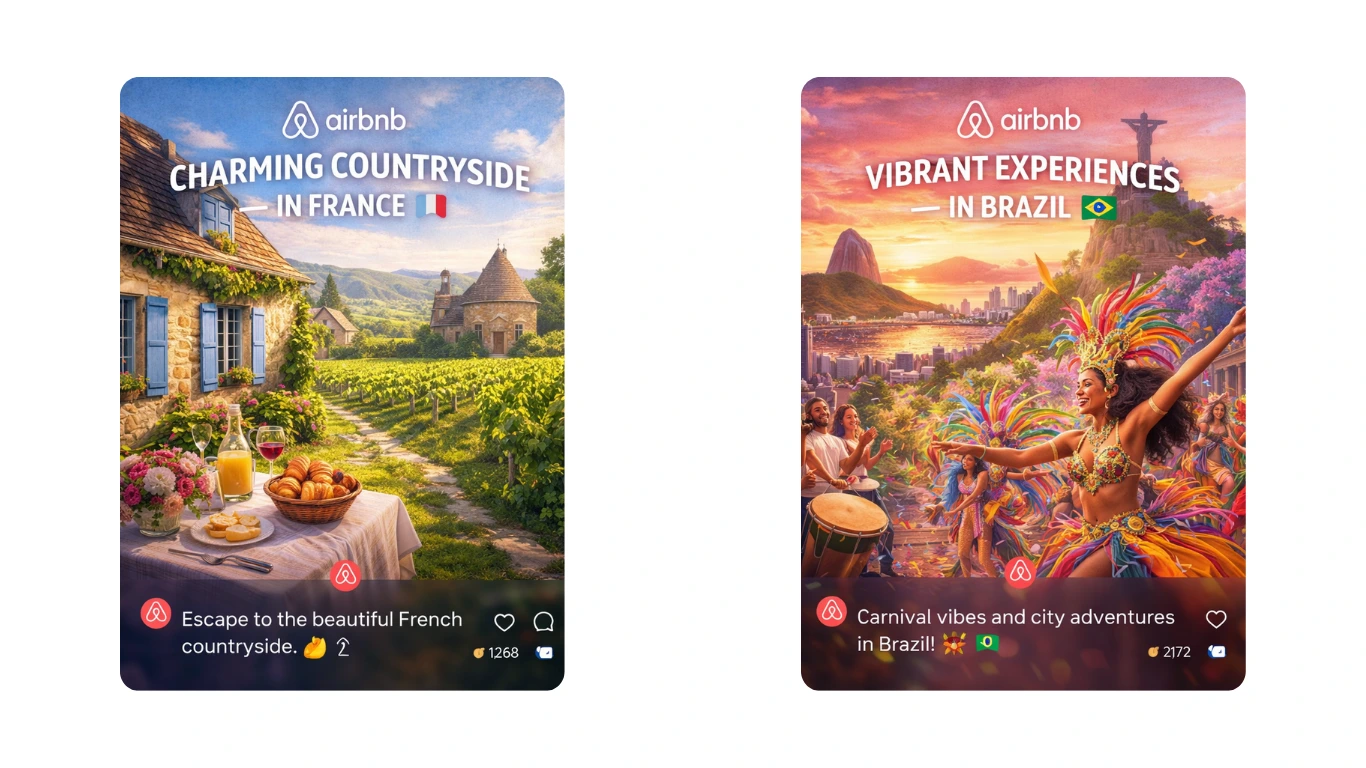
Airbnb localizes its social media by featuring listings, experiences, and stories that resonate with specific regions. In France, posts may focus on charming countryside stays, while in Brazil, content highlights vibrant city experiences and local festivals, creating a stronger connection with each audience.
Nike

Note: Visuals are AI-generated and used only to illustrate localization examples.
Nike tailors campaigns to local sports culture and events. For example, during the Lunar New Year, Nike China shares content featuring culturally relevant themes and colors, while in the U.S., campaigns may focus on major sports leagues like the NFL or NBA. This approach helps Nike feel relevant and engaging across diverse markets.
L’Oréal

Note: Visuals are AI-generated and used only to illustrate localization examples.
L’Oréal localizes its social media content by featuring beauty trends, products, and tutorials that resonate with specific regions. For example, in South Korea, posts highlight K-beauty routines and ingredients popular locally, while in the Middle East, content emphasizes skincare products suited to the climate and cultural preferences. This ensures L’Oréal’s global messaging feels relevant to each market.
Best Practices for Social Media Localization
Implementing localization effectively requires planning and strategy. Here are some best practices that businesses should follow.
Research Your Target Market
Before localizing content, businesses must understand their audience.
This includes researching:
-
Language preferences
-
Cultural values
-
Local trends
-
Popular social media platforms
This research helps create content that feels authentic and relatable.
Work With Native Speakers
Native speakers understand cultural nuances better than automated translation tools. Working with professional translators or localization experts ensures that content feels natural and avoids misunderstandings.
Maintain Brand Consistency
While content should be adapted for each market, the core brand identity should remain consistent. Your tone, values, and messaging should align with the overall brand voice across all regions.
Use Local Influencers
Collaborating with local influencers can help brands reach new audiences more effectively. Influencers understand their audience and can communicate the brand message in a way that feels authentic.
Monitor Performance and Feedback
Localization is not a one-time process. Brands should monitor engagement metrics such as likes, shares, comments, and conversions to understand what works best. Feedback from local audiences can also help improve future campaigns.
Common Mistakes in Social Media Localization
Even experienced marketers can make mistakes when localizing social media content.
Some common mistakes include:
Direct Translation Without Context
Literal translations can sound unnatural and sometimes change the intended meaning. Localization requires adapting the message, not just translating words.
Ignoring Cultural Differences
Cultural misunderstandings can damage a brand's reputation. Companies must ensure that their content respects local customs and traditions.
Using the Same Content Everywhere
Posting identical content for all regions often leads to low engagement. Different audiences have different interests and expectations.
Overlooking Local Platforms
Focusing only on global platforms may limit reach in certain regions. Understanding local platform preferences can improve visibility and engagement.
Ignoring Local Language Tone and Slang
Every region has its own way of communicating online. Using inappropriate tone, slang, or overly formal language can make content feel unnatural and less relatable to the audience.
Conclusion
Social media has made it easier than ever for brands to connect with global audiences. However, reaching international users requires more than simply translating content.
Social media localization helps businesses adapt their messaging, visuals, and communication style to different cultures and languages. By doing so, brands can build stronger relationships, improve engagement, and expand their presence in global markets.
In a world where consumers expect personalized experiences, localization is no longer optional. It is a critical strategy for any business that wants to succeed internationally.
FAQ
What is social media localization?
Social media localization is the process of adapting social media content to match the language, culture, and preferences of a specific region or audience. Instead of simply translating posts, localization adjusts visuals, tone, cultural references, and messaging so the content feels natural and relevant to local users. This helps brands connect with international audiences more effectively.
Why is social media localization important for global marketing?
Social media localization helps brands communicate with audiences in a way that feels familiar and culturally appropriate. When users see content in their native language and aligned with their cultural context, they are more likely to engage with it. This improves brand trust, increases engagement rates, and supports stronger global marketing performance.
What is the difference between translation and social media localization?
Translation focuses on converting text from one language to another, while social media localization goes further by adapting the entire message. Localization considers cultural context, regional trends, tone of voice, imagery, and platform preferences to ensure the content resonates with the target audience.
How can brands create an effective social media localization strategy?
An effective social media localization strategy starts with understanding the target audience in each market. Brands should research cultural preferences, language variations, and popular social platforms in each region. Using local insights, adapting visuals and messaging, and maintaining a consistent brand voice across languages can help create impactful localized content.
What are the best practices for reaching global audiences through social media?
To reach global audiences successfully, brands should create culturally relevant content, adapt messaging for different regions, and publish content in local languages. It is also important to understand regional trends, collaborate with local teams or translators, and monitor engagement data to refine the localization strategy over time.